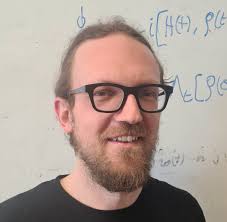
Andrea Smirne: I obtained my Ph.D. in Physics from the University of Milan in 2012. I subsequently held postdoctoral positions at the University of Trieste (2013–2014) and at the Institute for Theoretical Physics of the University of Ulm (2015–2019), before returning to the University of Milan, where I am currently Associate Professor.
My research focuses on the theoretical study of open quantum systems. In particular, I am interested in foundational aspects such as identifying inherently nonclassical features in multi-time statistics and characterizing non-Markovianity in the quantum domain, as well as in developing optimal strategies in estimation or computation protocols that account for realistic noise effects.
Email: andrea.smirne@unimi.it
Personal WebPage: https://andreasmirne.wixsite.com/website
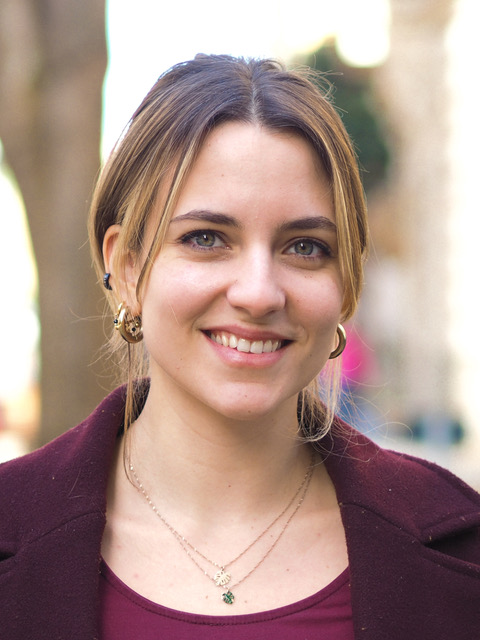
Alessandra Colla: I obtained my Ph.D. in Physics in early 2024 from the University of Freiburg, where I worked under the supervision of Heinz-Peter Breuer. I then joined QuReCo as a postdoc at the University of Milan until the end of 2025. Currently, I am a researcher at the University of Freiburg.
My research interests lie at the crossroad between open quantum systems and quantum thermodynamics. I am particularly active in investigating thermodynamic aspects of open quantum systems strongly coupled to their environments, focusing both on the definition of thermodynamic quantities in the strong-coupling regime and on the role of memory effects and non-Markovianity in the irreversibility of open systems.
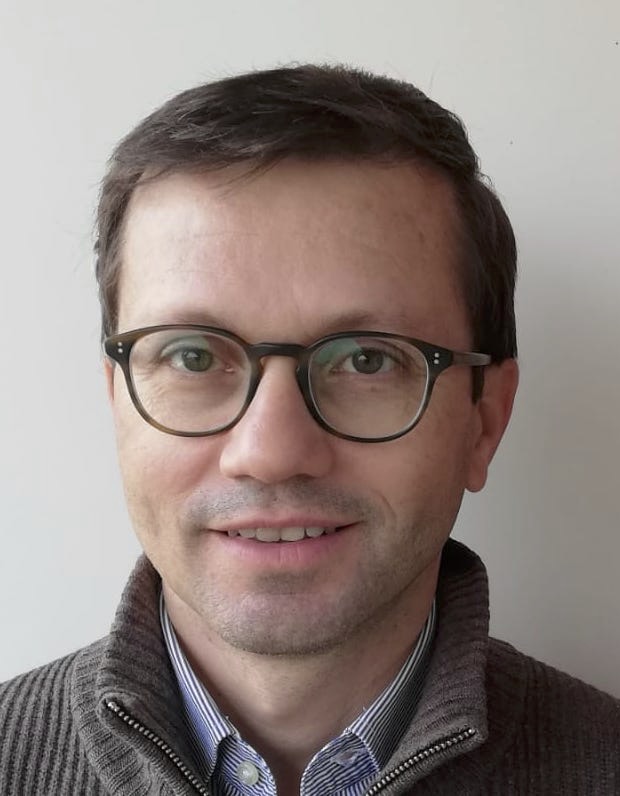
Bassano Vacchini: He has been a Full Professor at the “Aldo Pontremoli” Department of Physics, University of Milan, since 2024. A world-leading expert in the theory of open quantum systems, he is the author of the reference textbook “Open Quantum Systems: Foundations and Theory” (Springer Nature, 2024). His research focuses on the microscopic derivation and mathematical characterization of master equations, with a particular emphasis on the non-Markovian memory properties of quantum dynamical maps.
His over 100 publications—including a landmark Review of Modern Physics and three single-author Physical Review Letters —cover various topics in open quantum systems, ranging from decoherence to memory effects and quantum thermodynamics. His professional contributions include serving on the EPL Editorial Board and being recognized as an APS Outstanding Referee in 2024.
A dedicated mentor, he has established a prominent research line in open quantum systems at the University of Milan, training a new generation of scientists in the field.

Alessandro Ferraro: He is Associate Professor at the University of Milan (Pure and Applied Quantum Mechanics Group). After being awarded his PhD from the University of Milan (Italy) in 2005, he held fellowships and research positions at the Institute of Photonic Sciences (ICFO, Spain, 2006-2009), Autonomous University of Barcelona (Spain, 2010), University College London (UK, 2011-2012) and Sussex University (UK, 2013), funding his research via the award of various individual fellowships and grants, including the Juan De La Cierva (Spain) and Marie Curie (EU) fellowships. In 2013 he was appointed as Lecturer at Queen’s University Belfast (UK), and promoted as Senior Lecturer in 2020, when he become Head of the Research Centre for Theoretical Atomic, Molecular, and Optical Physics (CTAMOP). In 2022 he was appointed by the University of Milan.
He is author of 90+ publications, including 13 Phys. Rev. Lett., 1 Nat. Photonics, 1 Nature News&Views. He routinely delivers talks at international conferences and visits internationally recognised research centres for collaboration purposes. He has been in charge as single instructor of various Bachelor and Master courses at Milan University, Queen’s University Belfast, and Sussex University.
Ferraro’s research spans various aspects of theoretical phyics, regarding in particular the theory of quantum information technologies and quantum optics. His main expertise lies in the area of quantum information theory over continuous variables, having authored a book that is considered a standard reference on the subject. He also contributed with various publications
to the research on the foundations of quantum mechanics, quantum thermodynamics, and quantum machine learning.